The HAIIS Framework
A vendor-neutral, compliance-by-design approach to healthcare AI implementation.
Principles
Framework Principles
Vendor-Neutral
Built across AWS, Azure, GCP, and other platforms
Compliance-by-Design
HIPAA and GxP embedded from the start
Open-Access
Publicly available without restrictive licensing barriers
Actionable
Patterns and playbooks, not just principles
Education-First
Training-based approach for workforce development
HAIIS Core Pillars
The HAIIS framework (HAIF) is organized around five components intended to address common implementation barriers in healthcare AI.
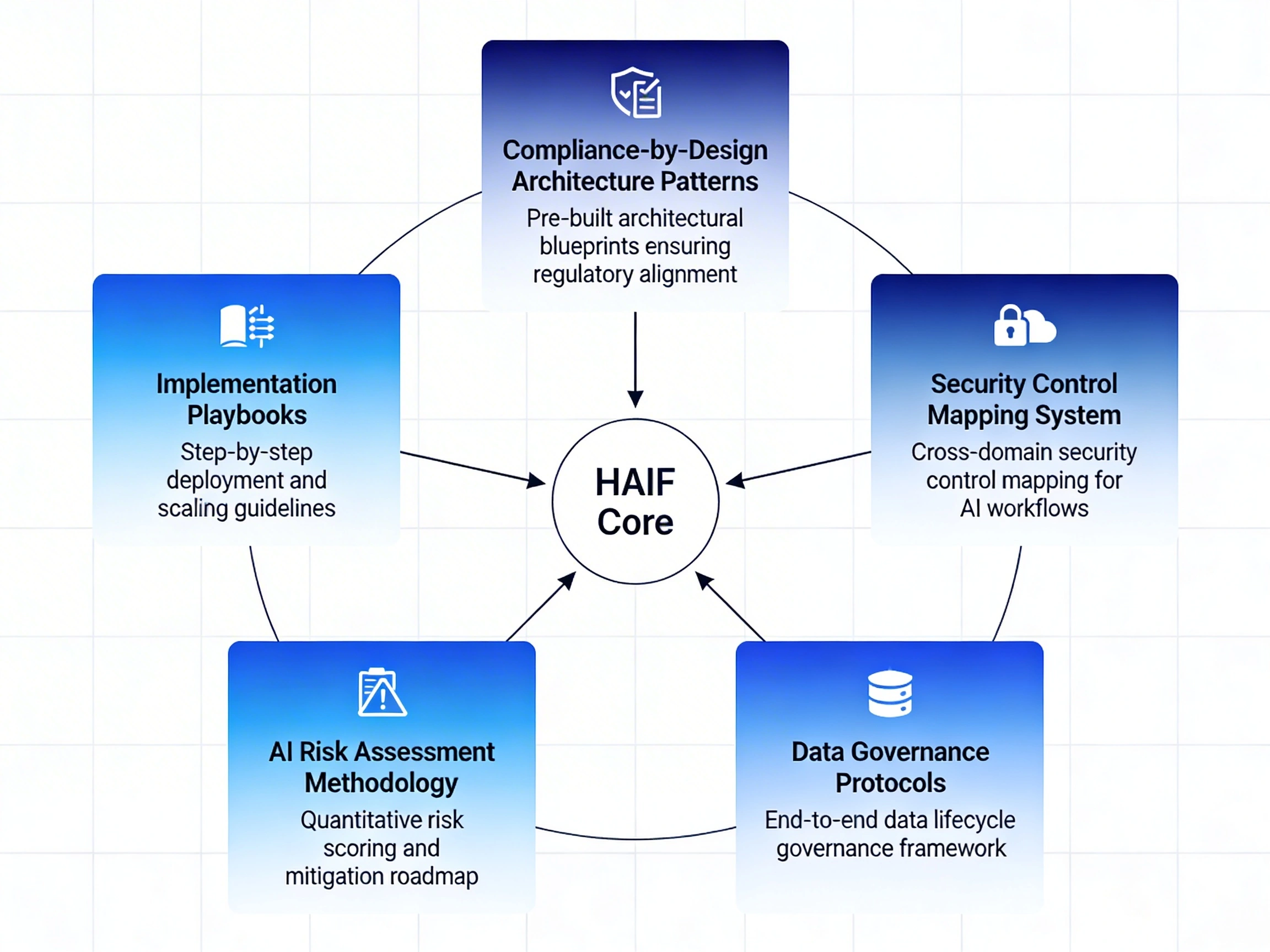
Components
The Core Components
Compliance-by-Design Architecture Patterns
Problem
Healthcare organizations struggle to implement AI while meeting regulatory requirements like HIPAA, GxP, and FDA standards.
Solution Overview
Implementation patterns designed to help teams embed HIPAA-, GxP-, and FDA-relevant considerations into system architecture from the outset.
Target Users
Cloud architects, IT leaders, compliance teams
Key Features
- Architecture templates for common AI use cases
- Compliance checklists integrated into design patterns
- Reference implementations across cloud platforms
Security Control Mapping System
Problem
Inconsistent security controls across different cloud providers create gaps and compliance risks.
Solution Overview
Cross-cloud guidance for aligning security controls across AI workloads and healthcare data environments.
Target Users
Security architects, cloud engineers, compliance officers
Key Features
- Cross-cloud security control matrices
- Implementation guides for each cloud platform
- Security validation checklists
Data Governance Protocols
Problem
Managing sensitive healthcare data across AI training, inference, and monitoring lacks standardized approaches.
Solution Overview
Reusable approaches for data handling, access, lineage, and oversight across the AI lifecycle.
Target Users
Data governance teams, AI engineers, privacy officers
Key Features
- Data classification frameworks
- Access control templates
- Audit and monitoring guides
AI Risk Assessment Methodology
Problem
AI introduces unique risks in healthcare that traditional risk frameworks don't adequately address.
Solution Overview
A structured approach for identifying and mitigating healthcare-specific AI implementation risks.
Target Users
Risk managers, compliance teams, AI project leads
Key Features
- Risk assessment worksheets
- Mitigation strategy templates
- Healthcare-specific risk catalogs
Implementation Playbooks
Problem
Healthcare organizations need concrete, step-by-step guidance for implementing AI solutions.
Solution Overview
Step-by-step guides intended to help teams move from concept to controlled deployment.
Target Users
Project managers, implementation teams, technical leads
Key Features
- Use case-specific implementation guides
- Step-by-step deployment checklists
- Troubleshooting and optimization tips
Roadmap
Framework Roadmap
2026
Foundation
Define the initial framework structure, publish concepts, and open collaboration channels
2027–2028
Validation
Review and refine framework components through feedback and early implementation discussions
2029–2030
Documentation Expansion
Publish implementation guides, templates, and practical examples
2030+
Scaling
Support education, partnerships, and continuous refinement based on community input